
Drainage: Get a free price quote
Drainage
Do you have problems with a damp basement or water accumulation around your home? Then it may be time to check your drainage. A well-functioning drainage system is important for keeping your home dry and avoiding costly damage.
Here you can find out what drainage is, how it works and what it costs. We can also provide you with a free, no-obligation quote from a contractor in your area.
Get a free quote for drainage
Send us a short description of your wishes and needs, and we’ll help you find the most suited contractor.
Your contact information will only be used in connection with the request. Your personal data will not be disclosed to unauthorized persons.
Three simple steps to get a quote for drainage:
1. Send a request
Send us a request with a short description of your wishes and needs.
All requests about drainage are processed as soon as possible.
2. Receive your free quote
You will receive a free and non-binding price quote from a contractor near you soon after your request has been sent.
Once you approve the price quote, a suitable time for performing the task is scheduled.
3. The task is performed
The contractor will perform the task efficiently, fulfilling your requirements to a high standard of quality.
Entreprenorer.no partners with skilled and qualified contractors all across Norway.
What is meant by drainage?
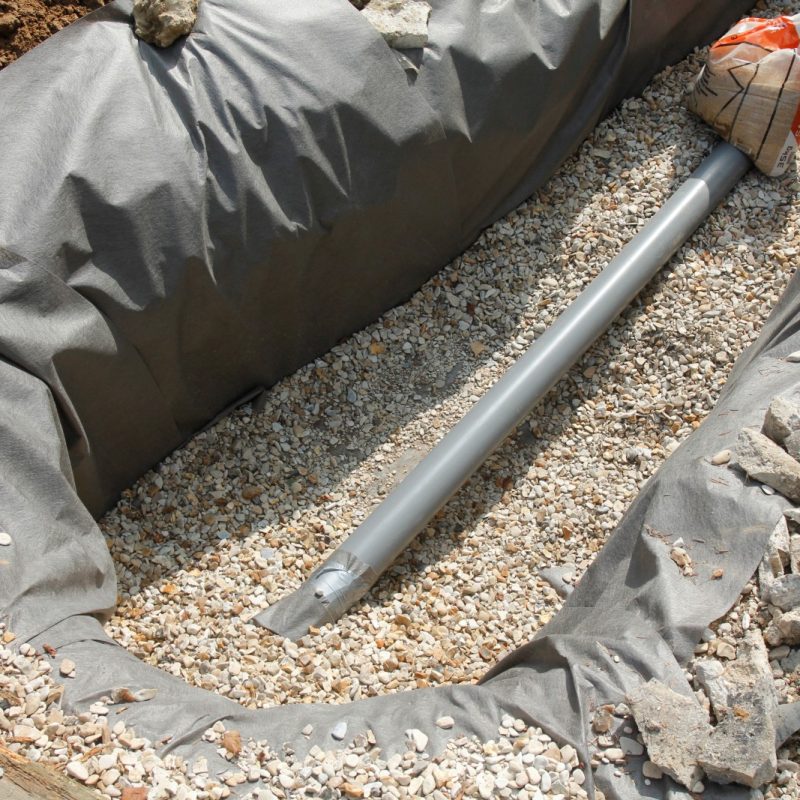
Drainage is about directing water away from your house. It is a system of pipes, crushed stone and filter cloth laid around the foundation. These collect water from rain and meltwater and lead it away from your home.
This prevents water from entering the basement or damaging the foundation over time. A good drainage system is important to keep your home dry and healthy. Without drainage, you may experience problems with moisture, mold and even subsidence damage.
How does drainage work?
In a nutshell, drainage is a system that protects your home from water damage.
Here’s how it works:
- Collection of water: The drainage pipes are located in a trench around the foundation wall. They are covered with crushed stone and filter cloth. When rain or meltwater soaks into the ground, this layer collects the water.
- Drainage of water: The water flows into the drainage pipes through holes in the pipe walls. The pipes have a slight slope that allows the water to run away from the house. The felt prevents soil and pebbles from entering the pipes.
- Outlet: The drainage pipes lead the water to an outlet some distance away from the house. This can be a manhole, a stream or the municipality’s stormwater system. Here the water flows safely away and is prevented from damaging the home.
- Dry and healthy foundations: With drainage, you keep the area around the foundation dry. It prevents moisture from penetrating the basement and foundation. Drainage also protects against frost heaving and other damage caused by water and moisture over time. The drainage system works like the house’s own raincoat. It keeps unwanted water away, so you have a dry and comfortable home for many years to come. Drainage is a simple but effective system that every home should have.
Get a quote
Send us a request, and we’ll get you a free quote from a contractor.
When do you need to drain?
Drainage isn’t something you think about on a daily basis, but it’s important to be aware of the signs that your drainage isn’t working properly.
Here are some signs that you should take a closer look at your drainage:
- Damp basement: If you find that your basement is damp, smells of mold, or has salt deposits on the walls, it could indicate poor drainage.
- Standing water: If you see water standing around the foundation wall after rain or snow melt, it could mean that the drainage is not directing the water away effectively.
- Old drainage pipes: If your home is 30-40 years old or more, it may be time to check the condition of your drainage pipes. They may be clogged or damaged.
- Paint or plaster is peeling off: Moisture from poor drainage can cause paint or plaster on foundation or basement walls to flake off.
- Damaged foundations: In severe cases, poor drainage can lead to settlement damage or cracking of the foundation wall.
Get a quote
Send us a request, and we’ll get you a free quote from a contractor.
How much does drainage cost?
Drainage is an investment in your home, and the price depends on several factors.
- Drainage usually costs between SEK 4,000 and SEK 10,000 per running meter.
- On average, it costs around SEK 7,000 per linear meter.
In addition to the actual excavation work and materials, you need to factor in the cost of removing the material. This is usually NOK 1 to 1.5 per kilo. The amount of material that needs to be removed varies from plot to plot.
For a detached house of around 100 square meters, the total price for drainage will often end up in a location between NOK 150,000 and 300,000. This includes digging, materials, removal of material and clearing.
Remember that drainage is a preventive measure that can save you a lot of money on moisture damage and repairs later on. It can also make your downstairs more usable and valuable. So although it’s a significant investment, new drainage can be well worth the money in the long run.
What can affect the price of drainage?
The number of linear meters
The more meters of trench that need to be dug, the higher the price.Depth of the trench
Deeper digging requires more work and results in higher costs.Ground conditions
Difficult ground conditions such as rock, clay or high groundwater can make the job more time-consuming and expensive.Accessibility
If it's cramped or difficult to access with machinery, the price will go up.Additional services
The price is affected by whether you're also retrofitting insulation, installing damp proofing or making other improvements at the same time.Geographical location
Prices may vary slightly depending on where you live in the country.Choice of contractor
Larger companies with a high level of expertise may have higher prices than smaller players.
Why is drainage important?
The main purpose of the drainage is to direct water away from the house and ensure that the foundation and basement remain dry. This is important to avoid moisture damage, mold growth and other problems that can occur when water enters the home.
Drainage is especially important if you live in an area with a lot of rainfall, have a basement that is below ground level, or experience water standing around the house after rain. If your home is on a slope, good drainage can prevent water from running into the foundation.
The consequences of poor or missing drainage can be serious and costly. Moisture that penetrates the basement can provide a breeding ground for mold, which is detrimental to both the house and the health of those living there. Over time, moisture can also lead to rot damage in the wood or subsidence damage in the ground.
In the worst case, poor drainage can render a basement unusable and significantly reduce the value of the property. Preventing this with good drainage is therefore a smart investment that saves you worry and expense in the long run.
How often do you need to drain?
Drainage doesn’t last forever, but with good ground conditions and the right design, it can last for 50-60 years. Nevertheless, it’s a good idea to pay attention to signs that indicate that the drainage is not working optimally. Over time, the drainage masses around the home will usually become clogged with soil and clay.
How often you need to drain depends on several things:
- The age of the home: Older homes may have outdated drainage solutions that need to be replaced more often.
- Quality of the original drainage: Poorly executed drainage will have a shorter lifespan.
- Ground conditions and climate: Houses in areas with high rainfall and difficult ground conditions may need more frequent drainage.
- Changes to the site: If the terrain around the house changes, it can affect the drainage needs.
Generally speaking, you can expect good drainage to last for 40-60 years, but there are also examples of houses where the drainage has lasted for over 100 years. Remember to keep an eye out for warning signs such as dampness in the basement, standing water and salt deposits on the foundation. Then it may be time to check the drainage, regardless of the age of the house.
Get a quote
Send us a request, and we’ll get you a free quote from a contractor.
Can you drain your home yourself?
It is possible to drain your home yourself if you have good knowledge and experience of excavation work and drainage solutions. But for most people, it will be most appropriate to leave the job to professionals.
Drainage requires digging deep around the entire foundation of the house, which can be both heavy and time-consuming work. It’s important to dig to the right depth, with the right slope of the trench and without damaging the building’s structure.
Improperly executed drainage can, in the worst case, exacerbate moisture problems in location instead of solving them. If you dig too close to the wall or with the wrong slope of the trench, you can direct water towards the basement in location instead of away.
For most people, drainage is a job that is best left to experienced professionals. They have the knowledge and equipment to ensure that the drainage work is done correctly – providing a dry and safe basement for many years to come.