
Concrete work: Get a free price quote
Concrete work
Do you need help with concrete work for your construction project? Whether it’s a new build, extension, garage or patio, concrete is a good and solid choice. Concrete is a robust, long-lasting and low-maintenance material.
It doesn’t burn, withstands moisture and doesn’t rot.
On this page, we take a closer look at what concrete work entails, what it costs, and we answer questions that people often have in connection with a construction project.
We can also provide you with a free, no-obligation quote from a concrete contractor in your area.
Get a free quote for concrete work
Send us a short description of your wishes and needs, and we’ll help you find the most suited contractor.
Your contact information will only be used in connection with the request. Your personal data will not be disclosed to unauthorized persons.
Three simple steps to get a quote for concrete work:
1. Send a request
Send us a request with a short description of your wishes and needs.
All requests about concrete work are processed as soon as possible.
2. Receive your free quote
You will receive a free and non-binding price quote from a contractor near you soon after your request has been sent.
Once you approve the price quote, a suitable time for performing the task is scheduled.
3. The task is performed
The contractor will perform the task efficiently, fulfilling your requirements to a high standard of quality.
Entreprenorer.no partners with skilled and qualified contractors all across Norway.
What is concrete work?
Concrete work is an important part of most construction projects and includes all activities related to the use of concrete. The process starts with thorough planning and design, where things like concrete quality, dimensions and amount of reinforcement are determined based on the structure’s specific requirements and loads.
The actual execution of the concrete work involves several steps. First, the formwork is built, which acts as a temporary mold for the concrete. Then the reinforcement is installed, consisting of steel bars or reinforcing mesh, to give the concrete increased tensile strength and counteract cracking.
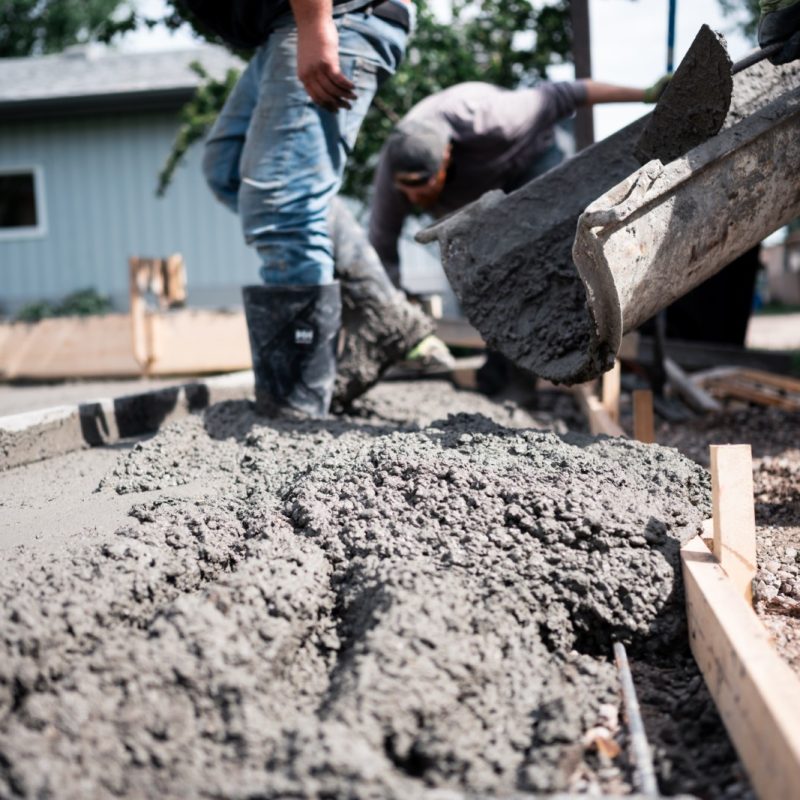
The next step is the actual casting, where fresh concrete is poured into the formwork. Correct compaction is important during casting to avoid air pockets and ensure good filling. After casting, the concrete must undergo controlled curing to achieve the desired firmness and strength.
When the concrete is sufficiently hardened, the formwork is removed and any damage or unevenness in the surface is repaired. If necessary, the surface can also be further treated with plastering, painting or special coatings.
Throughout the concrete work, it is important to have solid knowledge of the properties of concrete, construction techniques and applicable standards. Properly executed concrete work ensures that the structure is solid, durable and able to withstand the stresses and strains it is intended to withstand, whether for buildings, bridges, tunnels or other concrete structures.
What does concrete work cost?
The cost of concrete work depends on the size and complexity of the project, the quality and quantity of the concrete, the degree of reinforcement and the choice of contractor.
If you get a quote for concrete work for a construction project, you will often get a total price for the entire project, where all costs are included and considered. But there are also many who price their services per square meter, cubic meter or linear meter.
To give you an idea of the price level, we’ve gathered some examples of prices for common concrete works.
Price examples for concrete work:
- If you’re building something in brick, the price is usually between NOK 5,000 and 10,000 per square meter.
- Casting a base/foundation usually costs between NOK 30,000 and NOK 120,000, depending on size and complexity.
- Building a foundation wall usually has a total cost of between NOK 150,000 and NOK 500,000. The average for a detached house is around NOK 250,000.
- Prices for curtain walls usually vary from around NOK 600 to NOK 1,400 per linear meter, with an average of around NOK 900.
- Concrete for other casting work often costs between NOK 2,000 and 3,000 per cubic meter.
Get a quote
Send us a request, and we’ll get you a free quote from a contractor.
What can affect the price of concrete work?
Concrete quality and quantity
Higher quality and larger quantities of concrete will result in higher material costs.Degree of reinforcement
More reinforcement requires more steel and labor time, which affects the price.Project size and complexity
Larger and more intricate projects take longer and require more resources.Ground conditions and availability
Difficult ground conditions or challenging access can increase costs.Geographical location
Prices of materials and labor vary from area to area.Season
Concrete work in winter incurs additional costs for heating and protection.Special solutions and adaptations
Bespoke or unusual solutions can be more costly.Timeframe
Projects with a tight schedule or need for quick completion can have higher costs.Choice of contractor
Prices and expertise will vary between different contractors in the market.Additional services
Costs for design, groundwork, transportation and disposal of materials are often additional.
Selected concrete works:
Concrete is used for many purposes in construction projects, both for load-bearing structures and other elements. Below we have gathered information about some common concrete works, from foundations to concrete rehabilitation. At Direktoratet for byggkvalitet you can search for and find companies with central approval.
Foundation work
A solid concrete foundation ensures that the building has a stable base that transfers the load to the ground. The process starts with digging to the right depth, depending on the ground conditions and the size of the building.
Then formwork is set, reinforcement is installed, and the concrete is poured. Correct dimensioning and execution of the foundation is crucial to avoid settlement damage and ensure the life of the building.
Foundations can include footings, strip foundations or full slabs on grade. The method is chosen based on the building’s construction, ground conditions and insulation requirements.
A well-founded building will be able to stand firm for generations.
Reinforcement
Concrete has high compressive strength but low tensile strength. Placing steel bars or reinforcing mesh in the concrete increases the concrete’s ability to withstand tensile forces and counteract cracking.
The reinforcement is placed in the formwork before the concrete is poured, and the amount and placement is determined by the load and design of the structure.
Although concrete with reinforcement will also crack, the reinforcement contributes to the cracks being more finely distributed with many small cracks in location instead of a few large ones. This is beneficial for the strength and durability of the structure.
The reinforcing bars are profiled to ensure good adhesion to the concrete, and the cover must be sufficient to protect the steel from corrosion. Special solutions such as tension reinforcement and fiber reinforcement can also be used for specific purposes.
Formwork
Formwork is the temporary shape in which the concrete is cast to give the structure its final shape and dimensions. Formwork is usually made of wood, steel or prefabricated elements and must be solid, dense and dimensioned to withstand the weight and pressure of the concrete.
The choice of formwork material affects the surface and reusability of the concrete. The formwork is erected before the reinforcement is installed and must be accurately executed to ensure the correct geometry and avoid distortions or displacements.
After curing, the formwork is demolished, leaving a rough or smooth surface depending on the type and treatment. Good formwork is important for the quality and appearance of the structure.
Leveling
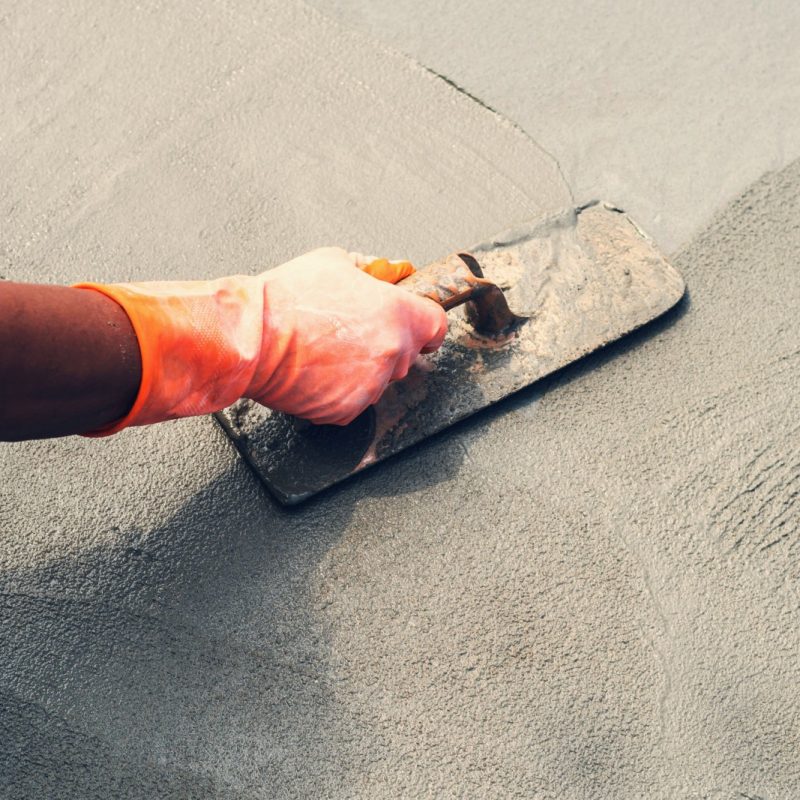
Screeding is the process of creating a flat and even concrete surface, whether it’s floors, decks or other horizontal surfaces. After the concrete has been poured, the surface is processed with special tools and machines.
Straightening ensures the correct height, slope and flatness according to tolerance requirements. In the case of large areas, the concrete is cast in fields or strips that are leveled separately and smoothed together.
The surface can be plastered for precision leveling or textured for anti-slip protection. Pigments, curing membranes and dust binders can be applied for aesthetics and protection.
A well leveled surface provides a functional and beautiful result that simplifies further work.
Concrete rehabilitation
Concrete rehabilitation is necessary when concrete structures are damaged, degraded or functionally impaired. The causes can be mechanical stresses, corrosion of reinforcement, frost heaving, chemical degradation or age.
Rehabilitation starts with a thorough diagnosis of the extent and cause of the damage. Damaged concrete is chiseled away, the reinforcement is treated, and the substrate is prepared.
Repair mortar, shotcrete or new concrete is then applied to restore the structure’s load-bearing capacity and protection. The surface is finished for the desired appearance and durability.
In some cases, reinforcement with carbon fiber, steel plates or tension reinforcement may also be required. Proper maintenance can extend the service life and reduce the need for extensive rehabilitation.
Get a quote
Send us a request, and we’ll get you a free quote from a contractor.
Why should you use concrete?
Concrete is one of the most widely used building materials in the world, and there are several good reasons for this. First of all, concrete is extremely durable and has a long service life. It can withstand heavy loads and is resistant to weather, wind, fire and moisture.
Concrete requires minimal maintenance compared to other building materials. In addition, concrete can be cast in virtually any shape and form, giving architects and engineers great freedom in the design process.
The raw materials used in concrete production are mainly local and readily available, making concrete a more affordable option than many other materials. In addition, the concrete can be recycled when the structure is demolished.
All this makes concrete a highly competitive choice for construction projects, whether for housing, commercial buildings, infrastructure or facilities. With concrete, you get a robust, flexible and economical solution with a long service life.
How long does concrete last?
Concrete is known for its long service life. A concrete structure can last for 100 years or more, given the right design and maintenance. The durability depends on factors such as the quality of the concrete, degree of reinforcement, covering and exposure environment.
Good workmanship with dense and frost-resistant concrete, sufficient reinforcement and enough cover is important for a long service life. Regular maintenance, such as cleaning, repairing damage and surface treatment, also helps to extend the life of the concrete.