
New build: Get a free price quote
New build
Are you dreaming of building a new house, cabin, garage or extension? Building something new is an exciting process, but it can also present challenges. On this page you’ll find information about prices for different types of new builds, what requires a planning application, the importance of good planning and the benefits of using professional contractors.
We can also provide you with a free, no-obligation quote from a contractor in your area.
Get a free quote for a new build
Send us a short description of your wishes and needs, and we’ll help you find the most suited contractor.
Your contact information will only be used in connection with the request. Your personal data will not be disclosed to unauthorized persons.
Three simple steps to get a quote for a new build:
1. Send a request
Send us a request with a short description of your wishes and needs.
All requests about new builds are processed as soon as possible.
2. Receive your free quote
You will receive a free and non-binding price quote from a contractor near you soon after your request has been sent.
Once you approve the price quote, a suitable time for performing the task is scheduled.
3. The task is performed
The contractor will perform the task efficiently, fulfilling your requirements to a high standard of quality.
Entreprenorer.no partners with skilled and qualified contractors all across Norway.
How much does it cost to build a new home?
The price of a new build depends on many factors such as size, materials, ground conditions, geographical location and market situation. The cost frameworks for different types of buildings can vary widely. Below we take a closer look at the prices for some common types of new builds, such as houses, garages, cabins and extensions.
House
The price of a new house is affected by factors such as the size of the house, land costs, choice of materials and quality, ground conditions, technical solutions, energy efficiency and geographical location. Basements, garages, balconies, additional bathrooms and kitchens also increase costs.
The market situation and the contractors’ capacity also affect the price level.
- As a rule, prices vary from NOK 25,000 to 45,000 per square meter.
- On average, it costs around NOK 35,000 per square meter.
- A house of 150 square meters usually costs between NOK 3,750,000 and 6,750,000.
- A house of 200 square meters usually costs between NOK 5,000,000 and 9,000,000.
Garage
The price of a garage depends on whether it is a free-standing garage or one that is integrated into the home. Prefabricated garages are often less expensive than a garage built from scratch.
The choice of material, such as wood or masonry/concrete, and the garage’s level of equipment, such as insulation, electricity, door etc. also affect the price. If you also want to use the attic in the garage as a living space or build an apartment above the garage, this will lead to increased costs.
- Prices usually range from NOK 10,000 to 30,000 per square meter.
- On average, it costs around NOK 15,000 per square meter.
- A typical garage usually costs from NOK 150,000 to NOK 300,000.
- A garage to be built underground usually costs between NOK 600,000 and NOK 1,500,000.
- A larger garage with a full-fledged apartment above it usually costs between SEK 1,500,000 and 3,500,000.
- A single carport usually costs between NOK 50,000 and 100,000.
- A double carport usually costs between NOK 80,000 and 160,000.
Cabin
The price of a cabin varies according to size, standard, choice of materials and location. Land price, groundwork, access to water, drainage and electricity are also important factors.
Prefabricated cabins are often somewhat cheaper than a traditionally built cabin.
- Prices usually vary between NOK 25,000 and 45,000 per square meter.
- On average, it costs around NOK 35,000 per square meter.
- A cabin of 70 square meters usually costs between NOK 1,750,000 and NOK 3,150,000.
- A cabin of 120 square meters usually costs between NOK 3,000,000 and 5,400,000.
Extensions
The price of an extension is affected by the size of the extension, choice of materials and technical installations. A two-storey extension is more cost-effective than a single-storey extension.
An extension with a bathroom and kitchen is more expensive than one with a living room only. Adaptations to existing structures for a seamless transition can also result in higher costs, depending on how complex the adaptations are.
- Prices usually vary between NOK 20,000 and 50,000 per square meter.
- On average, it costs around NOK 35,000 per square meter.
- An extension of 25 square meters typically costs between NOK 500,000 and NOK 1,250,000.
- An extension of 40 square meters typically costs between NOK 800,000 and NOK 2,000,000.
Which new buildings require an application?
The main rule is that all construction and demolition always requires an application:
- Garages, sheds and other buildings over 50 sqm.
- Extensions over 15 square meters.
- All types of extensions.
It is possible to build certain smaller structures without applying, as long as there are no other regulations governing construction on the plot in question. These buildings are exempt from the obligation to apply, provided that the plot’s utilization rate is not exceeded. The degree of utilization indicates how much of the plot can be built on.
It is important to check the zoning regulations for the area, as well as the municipality’s land use plans to clarify what applies to your property.
Building a new home requires planning:
Realizing the dream of a new build is an exciting process, but it also requires a lot of planning and coordination. There are many choices to be made and considerations to be considered to ensure a successful building project. Spending time on thorough planning lays a solid foundation for a smooth construction process and an end result you’ll be happy with.
Important things to consider:
- Site selection: Size, type of plot, sun conditions, views, public plans, zoning regulations, etc.
- Finances: Setting up a budget, obtaining loan offers and getting the financing in place.
- Building design: Floor plan, style, colors, facade, roof etc.
- Technical solutions: Ventilation, heating, electricity, water, drainage, fire protection etc.
- Energy efficiency: Insulation, windows, doors, and other environmentally friendly choices.
- Furnishings and equipment: Kitchens, bathrooms, wardrobes, appliances, smart technology etc.
- Documentation: Drawings, applications, contracts, FMV, HSE plan, control plans etc.
- Choice of professionals such as architects, contractors, craftsmen and builders.
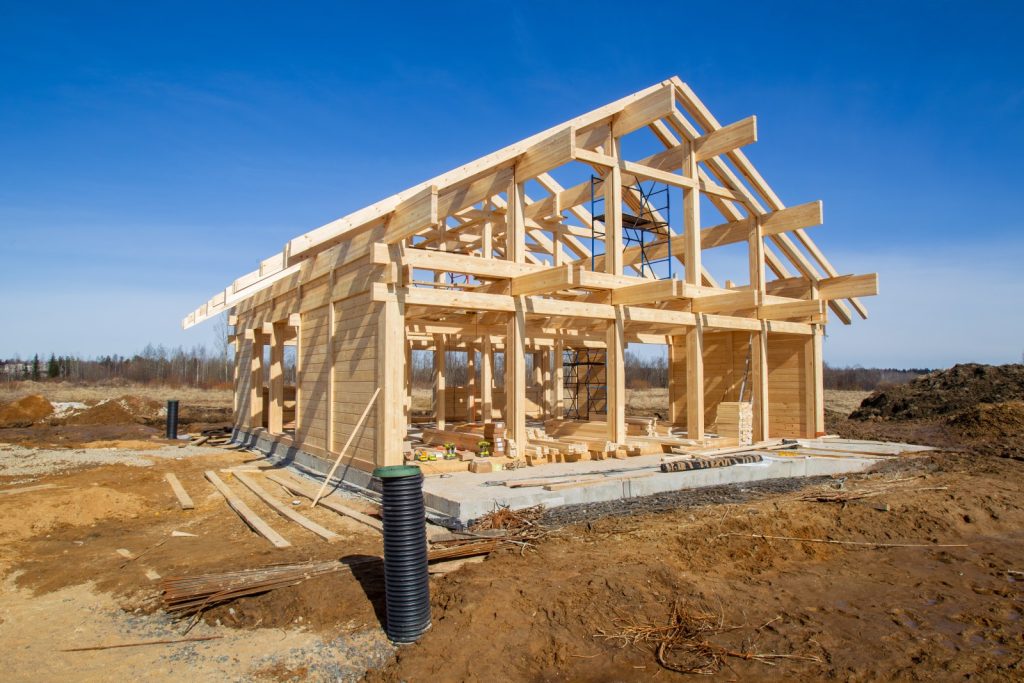
The benefits of using professionals
When you’re building a new home, there are many good reasons to use professionals. By involving qualified consultants and contractors, you gain access to valuable expertise throughout the process. They have experience of the building application process and can ensure that everything goes smoothly.
Professionals also tend to have better control over budgets, costs and the progress of the project.
You also don’t have to follow up the demanding construction process yourself on a daily basis. The quality of the end product is often higher, and the chance of errors and defects is reduced. Should defects nevertheless occur, you have the right to make a complaint and have them rectified at no extra cost for the first five years after the handover.
By handing over the responsibility to professionals, you reduce the risk and increase security for the entire project. This also saves you a lot of time and potential worries along the way. In a busy schedule, that’s a great value in itself.
All in all, the benefits of using professionals are many – and in most cases clearly worth the investment.