
Total renovation: Get a free price quote
Total renovation
Are you about to embark on a total renovation? A total renovation will breathe new life into your home, increase its value and allow you to customize its functionality to suit your needs.
On this page, you’ll find information about what total renovation involves, price examples, key price drivers and answers to frequently asked questions.
We can also provide you with a free, no-obligation quote from a contractor in your area.
Get a free quote for total renovation
Send us a short description of your wishes and needs, and we’ll help you find the most suited contractor.
Your contact information will only be used in connection with the request. Your personal data will not be disclosed to unauthorized persons.
Three simple steps to get a quote for total renovation:
1. Send a request
Send us a request with a short description of your wishes and needs.
All requests about total renovation are processed as soon as possible.
2. Receive your free quote
You will receive a free and non-binding price quote from a contractor near you soon after your request has been sent.
Once you approve the price quote, a suitable time for performing the task is scheduled.
3. The task is performed
The contractor will perform the task efficiently, fulfilling your requirements to a high standard of quality.
Entreprenorer.no partners with skilled and qualified contractors all across Norway.
What is meant by total renovation?
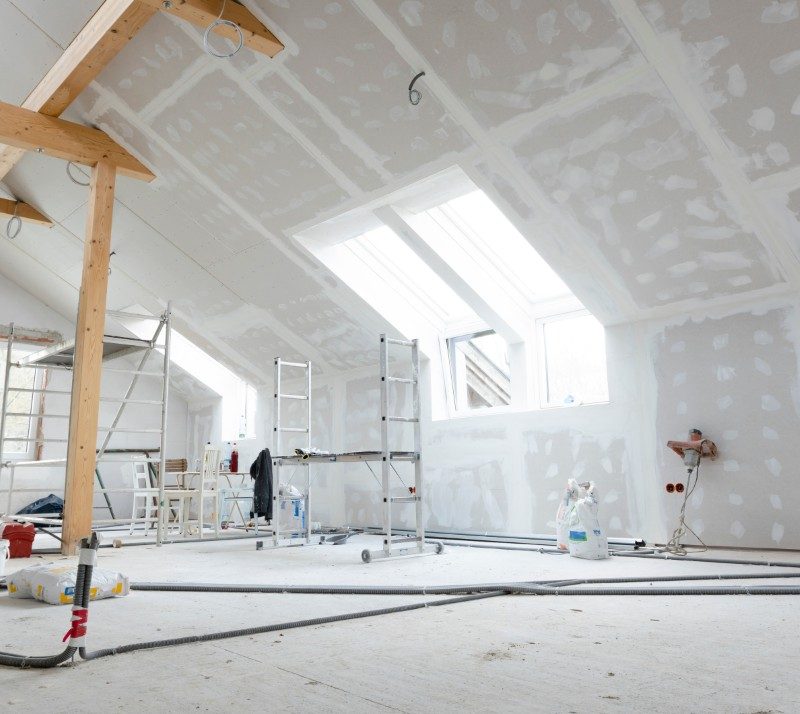
Total renovation is a comprehensive refurbishment of a home, where a comprehensive upgrade of both the interior and technical installations is carried out. A total renovation covers all rooms and functions in the home, such as bathrooms, kitchens, bedrooms, living rooms and any other living areas. The aim is to give the home a completely new look and improve its functionality.
A total renovation usually involves refurbishing surfaces such as floors, walls and ceilings, replacing doors and windows, and upgrading electrical and sanitary installations. This can include new pipes, a new electrical system, a new ventilation system and the installation of waterborne heating. Total renovation also provides the opportunity to change the floor plan for better space utilization and adaptation to current housing standards and needs.
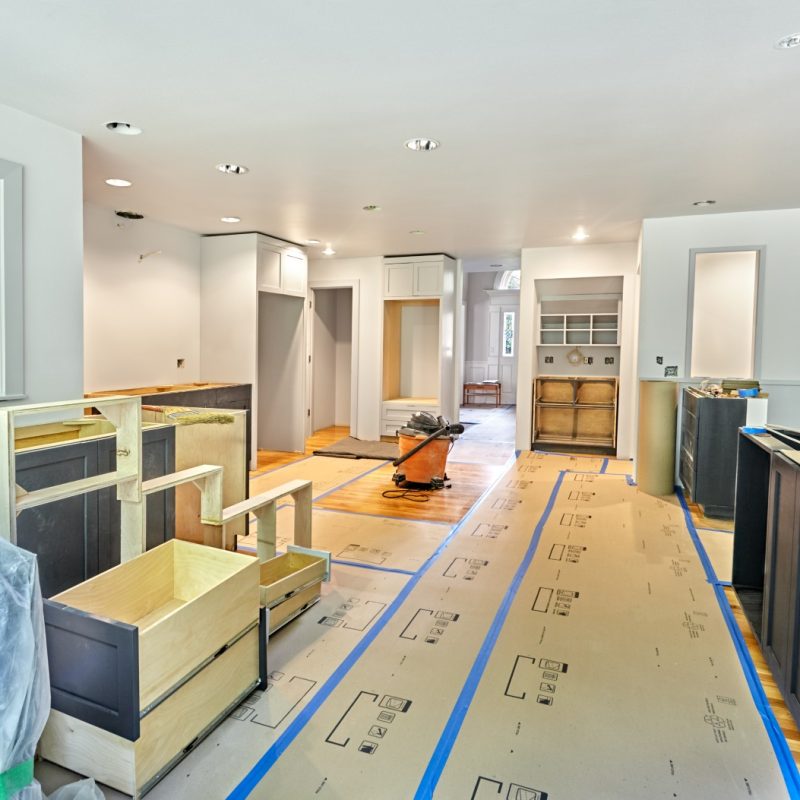
In a total renovation, it is common to replace all fixtures and fittings, such as kitchen fittings, bathroom fittings, wardrobe solutions and other fixtures and fittings. Flooring, tiles, parquet, paneling and mouldings are also often replaced with a holistic and modern look.
The scope of a total renovation can vary, but the common denominator is that the entire home is tackled and thoroughly refurbished and modernized. The result is a home that looks new, with improved functionality, comfort and energy efficiency.
How much does it cost to completely renovate a house?
There are many choices to be made during the renovation process that can affect the price in one direction or another. Every project is unique, and people have different wants and needs.
The price examples we provide are intended as a general indication of the prices you can expect, but please note that prices can be both higher and lower than this.
Interior total renovation of a house price
- On average, it costs around NOK 15,000 per square meter.
- Prices usually vary between NOK 10,000 and 25,000 per square meter.
Exterior total renovation of a house price
- On average, it costs around NOK 25,000 per square meter.
- Prices usually vary between NOK 20,000 and NOK 40,000 per square meter.
Total renovation of bathroom price
- On average, it costs around NOK 70,000 per square meter.
- Prices usually vary between 50,000 and 120,000 SEK per square meter.
What affects the price?
The size of the home
Larger homes require more work and materials, increasing costs.Condition of the home
A home in poor condition will require more work and possibly the repair of hidden defects.Craftsman services
Carpenter, painter, plumber, electrician, tiler, architect, tinsmith, general contractor etc.Standard and quality
Higher standards and quality of materials, fittings and solutions cost more.Change of floor plan
Extensive changes to the floor plan, such as moving walls or changing room divisions, increase the complexity of the project.Number of bathrooms and kitchens
These are usually the two most expensive rooms to renovate, especially the bathrooms.Technical upgrades
Replacing or upgrading the electrical, plumbing, ventilation and heating systems significantly affects the price.Geographical location
Prices of handyman services and materials vary in different parts of the country.Self-employment
If you are able to carry out some of the work yourself, you can reduce costs.Unforeseen expenses
It’s important to have a buffer in your budget for unexpected costs that may arise during the renovation.
How can you calculate the increase in value?
It’s difficult to predict exactly how much a total renovation will increase the value of your home, as this depends on a number of things. The property’s location, pre-renovation standard, the quality of the work carried out and general market conditions all come into play.
To get a more accurate assessment of the increase in value, you may want to engage an appraiser or real estate agent after the renovation has been completed. They can provide an updated market valuation based on the home’s new condition and compare it with the prices of similar homes in the area. This will give a better picture of how the total renovation has affected the value of the property, in light of the current housing market.
Does total renovation require an application?
In many cases, a total renovation will require an application under the Planning and Building Act. The application requirement applies to measures that change or affect the building’s construction, fire safety, energy use or appearance.
Examples of measures requiring an application for total renovation:
- Changes to the floor plan and room layout.
- If a room is to be changed from non-permanent to permanent living space.
- Change of use of basement or attic.
- Replacement or modification of load-bearing structures.
- A rental unit that is to be changed into an independent residential unit.
- Significant changes to the facade and external appearance.
Minor interior changes, such as refurbishing surfaces, replacing furnishings and minor technical installations, are usually exempt from the application requirement. However, it is always a good idea to check with the municipality to clarify whether the measures you are planning require an application.
You can find more information about the application requirement and exemptions on the Norwegian Building Authority’s website.
Get a quote
Send us a request, and we’ll get you a free quote from a contractor.
How long does it take to completely renovate a house?
How long it takes to completely renovate a house depends on the size of the home and the scope of the work. For an average detached house of 150 square meters, you can expect a total renovation to take between 4 and 6 months. In some projects it can take up to a year.
Smaller apartments may have a shorter time frame, typically 2-3 months. The time required is also influenced by the availability of tradesmen, delivery times for materials and any unforeseen challenges that arise along the way. Good planning and coordination of the various works to be carried out is important to keep the project on schedule.
What is the difference between refurbishment and total renovation?
The main difference between refurbishment and total renovation lies in the scope of the work. A refurbishment is usually limited to a few rooms or parts of the home, such as redecorating a bedroom or painting the living room. A total renovation is a holistic and comprehensive renovation of the entire home, covering all rooms and upgrading both the aesthetic and technical aspects of the home.
It’s important to have a good plan
Complete renovations are expensive and it’s important to make a good plan from start to finish.
You should clearly define your goals and priorities for the renovation, whether it’s to improve the home’s functionality, appearance, increase the number of square meters, or make the home more energy efficient.
Tips for a good renovation plan:
- Set up a realistic budget that covers all costs, including materials, labor and a buffer for unforeseen expenses. Consider spreading the costs over several years and do one room at a time if finances are limited.
- Start with the most used rooms, such as the living room and kitchen, for increased comfort during the process. Also prioritize the technical aspects, such as ceilings, windows and insulation, to reduce heat loss and electricity costs.
- Get inspiration from sources such as Pinterest, Instagram, material suppliers’ websites, home fairs and interior magazines. Many people choose to engage an interior architect or interior designer for personal help in finding the best solutions for their home.
- Create a detailed project plan that specifies material choices, solutions and any structural changes. Obtain the necessary permits from the municipality and assess the need for an architect or technical draftsman.
- Develop a schedule that covers all phases of the project, from start to finish, taking into account periods when bathrooms, kitchens and bedrooms may be unavailable.
Good planning can save you tens of hours of work and lay the foundation for a successful and well-executed project.
What can you do yourself?
How much you can do yourself during a total renovation depends on your skills, experience and available time. Nevertheless, there are several tasks that can be carried out on your own.
Demolition and removal of old fixtures and fittings
This is often easy to do yourself and can save significant labor costs.Floor laying
Laying laminate, parquet or vinyl is an affordable task for many.Other interior work
Installing skirt boards or simple carpentry can also be tasks you can carry out yourself if you have the necessary skills and tools.Painting
Painting walls, ceilings and moldings is often easy to do on your own.Tiling
With a little practice and patience, you can achieve good results by laying tiles yourself.Installing the kitchen
Installing kitchen fittings can also be a task for someone who is a little handy.
Remember that DIY can save you money but be realistic about your own capacity and skills. Incorrectly executed work can lead to extra costs and project delays.
Electrical work, plumbing, roofing, structural alterations, insulation work and window replacement should always be carried out by professionals.